Thinking about living in Longmont and letting rent help pay the mortgage? House hacking can be a smart way to reduce your monthly cost while building equity in a market you love. If you are a first-time buyer or an owner-occupant investor, you want clear numbers, local rules, and a simple path to your first deal. This guide gives you the Longmont market snapshot, the property types that work, key financing notes, an ADU rules overview, and a worked example using early 2026 figures. Let’s dive in.
What house hacking means in Longmont
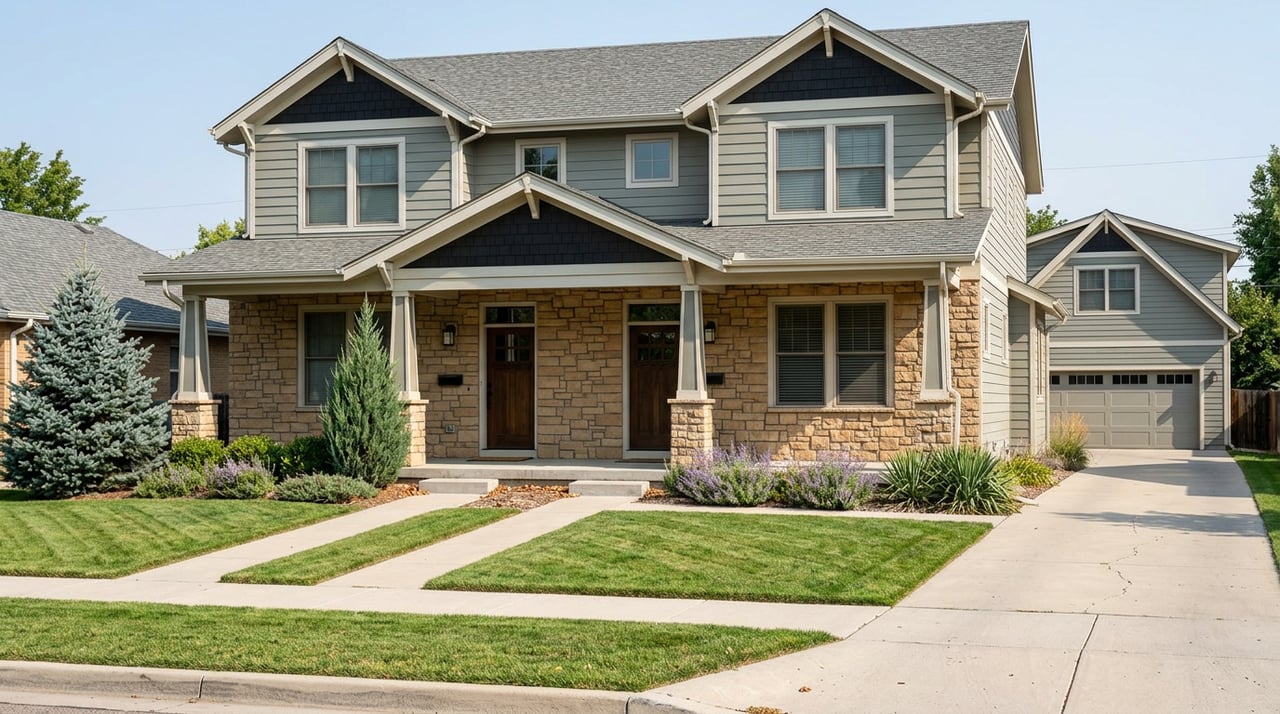
House hacking means you live in one part of a property and rent the other space to offset your housing costs. In Longmont, that often looks like one of four setups:
- Duplex where you live in one unit and rent the other.
- Single-family home with a legal accessory dwelling unit (ADU) you rent long term.
- Triplex or fourplex where you occupy one unit and rent the others.
- A larger single-family home where you rent a room or a finished basement as a long-term tenancy.
The goal is simple: lower your out-of-pocket each month while you build equity and keep flexibility for the future.
Longmont market snapshot you can use
- Prices: The median Longmont sale price sat around $545,000 in January 2026. Other indexes show typical values near $542,000. Treat this as your baseline for starter inventory and small multifamily.
- Rents: Common averages run about $1,600 to $1,900 per month citywide, depending on unit size. A conservative underwriting band of $1,400 to $2,100 per unit is reasonable for most Longmont locations. For a current reference point, see the Longmont averages for 1-bedroom and 2-bedroom units on RentCafe’s trends page.
- Mortgage rates: Early 2026 30-year fixed averages hovered near 6.0 to 6.2 percent. Rates move weekly, so always plug in current quotes. You can track the weekly series on Freddie Mac’s PMMS archive.
- Property taxes: Your tax bill rests on Boulder County assessment and the applicable mill levies. Review the county’s walkthrough of the calculation steps on Boulder County’s tax-calculation page, then pull parcel-specific data from the assessor before you write offers.
Property types that work here
Duplex and small multifamily
Duplexes remain a popular house-hack format because the second full unit often commands stronger rent than an ADU. You occupy one side, rent the other, and share few systems. Triplexes and fourplexes can work, too, but financing rules are different and underwriting must be tighter.
Single-family with a legal ADU
A single-family home with a permitted basement apartment, garage conversion, or detached carriage house can be an approachable path for first-time buyers. In Longmont, ADUs have clear size and siting rules. If an ADU is part of your plan, confirm legality, permits, and parking early with the City.
Larger homes with rentable space
Some owners rent a bedroom or a finished basement as a long-term tenancy. If you go this route, use a written lease, respect privacy and safety requirements, and verify any zoning or licensing items that might apply. Model vacancy and maintenance carefully since shared-space rentals can see more wear.
Financing options overview
FHA for 2–4 units
FHA financing lets owner-occupants buy 2–4 unit properties with a low down payment, often 3.5 percent with qualifying credit. For 3–4 unit FHA purchases, the appraiser’s market-rent estimate must pass the program’s self-sufficiency test, where the calculated net rental income needs to cover PITI. This is a key gate for triplex and fourplex buyers. Review policy details in HUD’s Single Family Housing Handbook 4000.1.
Conventional and VA
Conventional owner-occupant loans can fund 2–4 unit purchases, and some programs offer lower down payment options depending on lender overlays and reserves. VA buyers who qualify can also purchase 2–4 unit properties as owner-occupants. Because guidelines change, shop lenders and compare how each will treat projected rental income, reserves, and closing timelines.
Longmont ADU rules you need to know
Longmont updated its ADU standards in 2025 and provides a clear, step-by-step guide to help you plan a compliant project. Start with the City’s official ADU Guide to learn the standards, submittals, and fees.
Key local points for house-hackers:
- Size and quantity: One ADU per lot is allowed. Detached ADUs generally cap at 800 square feet unless you qualify under percent-of-house allowances. Setbacks and accessory structure limits apply.
- Permitting process: Expect plan check, building permits, inspections, and possible utility sign-offs. The guide lists typical fee ranges and checklists. A pre-application chat with Planning and Building helps you avoid surprises.
- HOAs: Under Colorado law, HOA rules that effectively prohibit ADUs are typically not enforceable. HOAs may add reasonable restrictions that do not unreasonably increase cost or block construction. See the state’s summary on accessory dwelling units in Colorado for context and confirm details with your association.
- Short-term rentals: Longmont does not allow ADUs to be rented for fewer than 30 days. If you plan to host, read the City’s short-term rental licensing page for eligibility and licensing steps.
Underwriting example for Longmont (Jan–Feb 2026)
Below is a simple, conservative model for a median-priced single-family purchase with a permitted 1-bedroom ADU. Use current rates and the exact parcel tax when you run your real numbers.
- Purchase price: $545,000.
- Loan: FHA, 3.5 percent down. Loan amount about $525,925. 30-year fixed near 6.09 percent. Estimated principal and interest about $3,185 per month. Rates change weekly.
- Taxes: Underwriting placeholder about 0.62 percent of value. Around $3,380 per year, or $282 per month. Always check the specific parcel.
- Insurance: Rough estimate about $150 per month. Get quotes because premiums vary.
- Maintenance and capital reserve: One percent of purchase price per year is a common rule of thumb. About $454 per month.
- ADU rent: 1-bedroom market rent near $1,625. After a 5 percent vacancy assumption and owner management, effective about $1,544 per month.
Quick math:
- PITI subtotal: $3,185 + $282 + $150 = $3,617.
- Add maintenance reserve: $454. Total recurring estimate about $4,071.
- Subtract effective ADU rent: $1,544. Estimated owner out-of-pocket about $2,527 per month.
What it means: A legal ADU can meaningfully lower your monthly cost, even if it does not fully cover the mortgage. Larger down payments, lower interest rates, stronger rents, and value-add improvements can further improve the numbers.
How to run your numbers
Use a simple, repeatable checklist on every property you consider:
- Purchase price, down payment, and loan program.
- Interest rate, loan term, and estimated principal and interest.
- Property taxes using county methodology for the exact parcel.
- Insurance quotes for realistic monthly costs.
- HOA dues and any fixed utilities you pay.
- Maintenance and capital reserves. Many investors use 1 percent of purchase price per year.
- Vacancy at 5 to 10 percent, depending on unit type and demand.
- Property management fees if you will not self-manage. Budget 8 to 12 percent of collected rent.
- Market rent comps for each unit size and location.
Run both an owner-occupied scenario and a fully rented scenario for future planning. Keep your assumptions conservative so you are protected if the market shifts.
Operations and management
Managing tenants is work. You will handle screening, leasing, rent collection, bookkeeping, repair coordination, legal notices, and move-in and move-out inspections. Emergencies happen. If you prefer to keep a clear line between home life and operations, a local property manager can protect your time and your investment. Typical full-service fees range from about 8 to 12 percent of collected rent, and many owners find the trade-off is worth it.
Action steps to get started
- Talk to two lenders. Compare FHA, conventional, and VA options for 2–4 unit or ADU plans. Ask how projected rental income is treated, and review the FHA self-sufficiency test for 3–4 units in HUD Handbook 4000.1.
- Confirm ADU feasibility with the City. If an ADU is part of your plan, start with Longmont’s ADU Guide. Ask Planning about zoning, setbacks, parking, and submittals. A quick pre-application check can save weeks.
- Review HOA covenants. If the home is in an association, read the recorded documents and compare them with Colorado’s ADU rules summarized by the state’s Division of Local Government.
- Underwrite conservatively. Use today’s rate, the exact parcel tax from the county, actual insurance quotes, a 5 to 10 percent vacancy, and realistic management and maintenance assumptions.
- Inspect with intent. For ADUs and basement conversions, focus on structural, mechanical, egress, and permit history. If a unit is not legal, lenders may not count the rent, and you may need to permit or correct work.
- Learn the basics of Colorado landlord-tenant law. Review deposits, habitability, and repair timelines in Colorado’s Title 38-12 statutes.
Ready to put a plan in motion? With integrated buyer representation and local property management in one place, you get a smoother path from purchase to lease-up. If you want help finding an on-market duplex, modeling an ADU, or setting up management, reach out to Kenneth Allen to get started.
FAQs
What is house hacking for Longmont buyers?
- It is when you live in one unit of a property and rent out another unit or space to reduce your monthly housing cost while building equity.
How much rent can I expect in Longmont?
- As of early 2026, many Longmont units lease around $1,600 to $1,900 per month depending on size and location, with a conservative underwriting band of $1,400 to $2,100.
Are ADUs in Longmont allowed to be short-term rentals?
- No. Longmont does not allow ADUs to be rented for fewer than 30 days, and separate short-term rental rules and licensing apply to eligible hosts.
What is the FHA self-sufficiency test for 3–4 units?
- For FHA triplex and fourplex purchases, the appraiser’s net rental income calculation must cover PITI for the loan to qualify under FHA rules.
What should I include in my house-hack budget?
- Include PITI, HOA dues, utilities you pay, insurance, a maintenance reserve, vacancy, management fees if you will not self-manage, and realistic rents for each unit.
Do HOAs in Colorado still control whether I can build an ADU?
- HOAs can set reasonable rules, but state law limits their ability to prohibit ADUs outright. Always read your covenants and confirm with the City before you plan a build.